Wood, Stone, or Solid: Which Laminate Finish Fits Your Space?
Here’s a scene that plays out at Vidyalam almost every week. A client walks in with a fairly clear idea of their budget, their room size, and even their preferred color family. And then they stand in front of the sample board and go quiet for a second because they hadn’t actually thought about this decision yet: should the laminate look like wood, look like stone, or just be an honest, solid color with no pretending at all?
It’s a bigger decision than it first appears. Wood, stone, and solid finishes aren’t just three flavors of the same thing. They behave differently, suit different rooms, and honestly, say different things about a space.
Wood-Finish Laminates: Familiar, Warm, Rarely Wrong
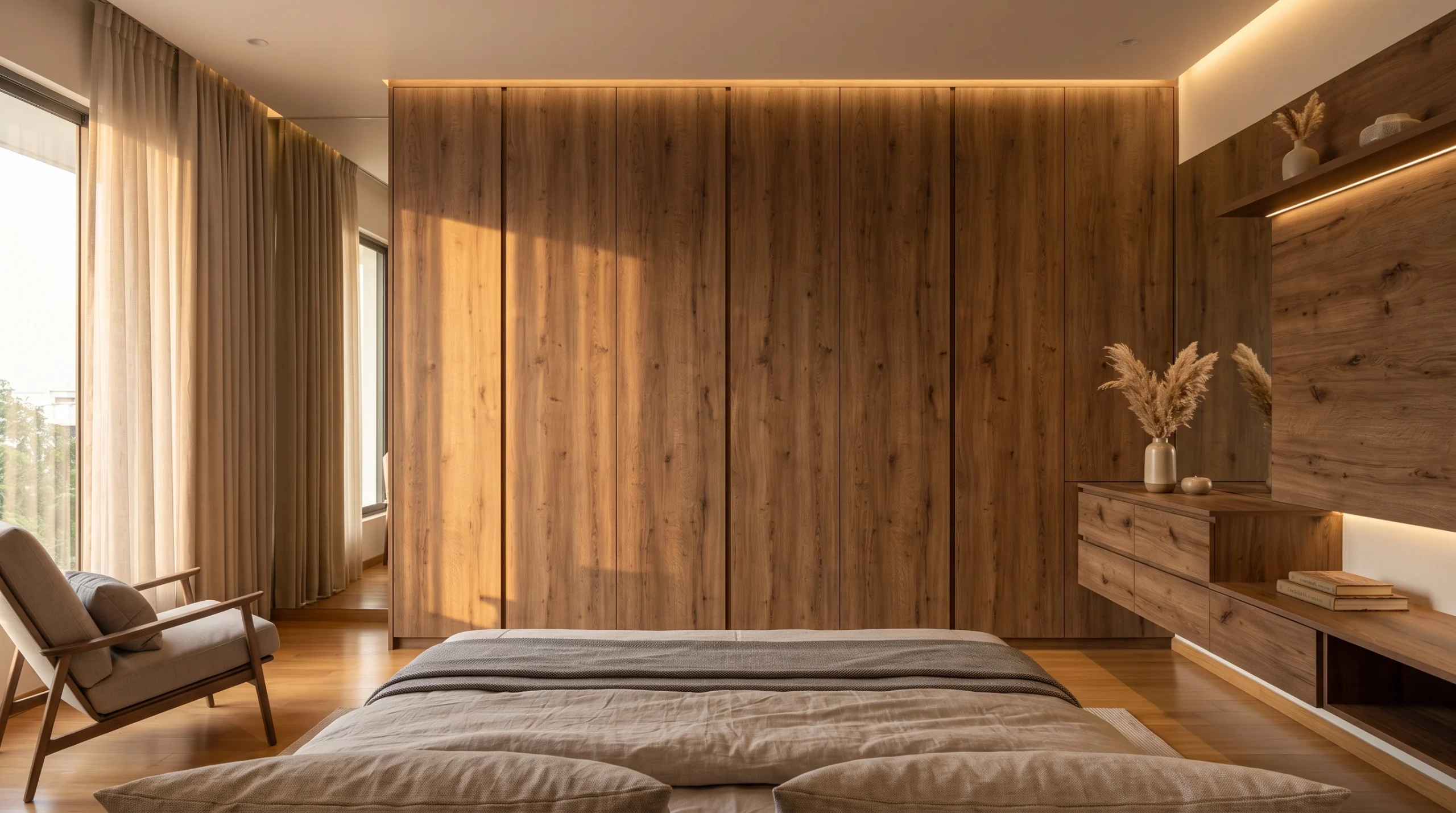
Wood-finish laminates exist because real wood is expensive, inconsistent, and high-maintenance, but the feeling of wood is something almost nobody wants to give up. So laminate manufacturers spend enormous effort replicating grain patterns, knots, and color variations closely enough that most people won’t clock the difference from a few feet away.
Where it works best: Wardrobes, bedroom furniture, study units, and increasingly, entire kitchen shutters. Wood tones have a strange ability to make a room feel instantly warmer and calmer, which is exactly why they dominate bedrooms and living spaces where the goal is comfort over drama.
What people often get wrong: Assuming all wood-finish laminates look the same. There’s a real difference between a light oak-style finish (airy; casual; works well in smaller rooms) and a deep walnut or teak-style finish (rich; formal; needs a bit more room to breathe visually). Picking the wrong wood-tone depth for your room size is one of the more common regrets we hear about.
The honest trade-off:
Wood-finish laminates rarely look “wrong”; they’re the safest choice on this list. But safe also means common. If you want your space to feel distinctly yours rather than pleasantly familiar, wood alone might not get you there.
Stone-Finish Laminates: Bold, Structural, a Little Unforgiving
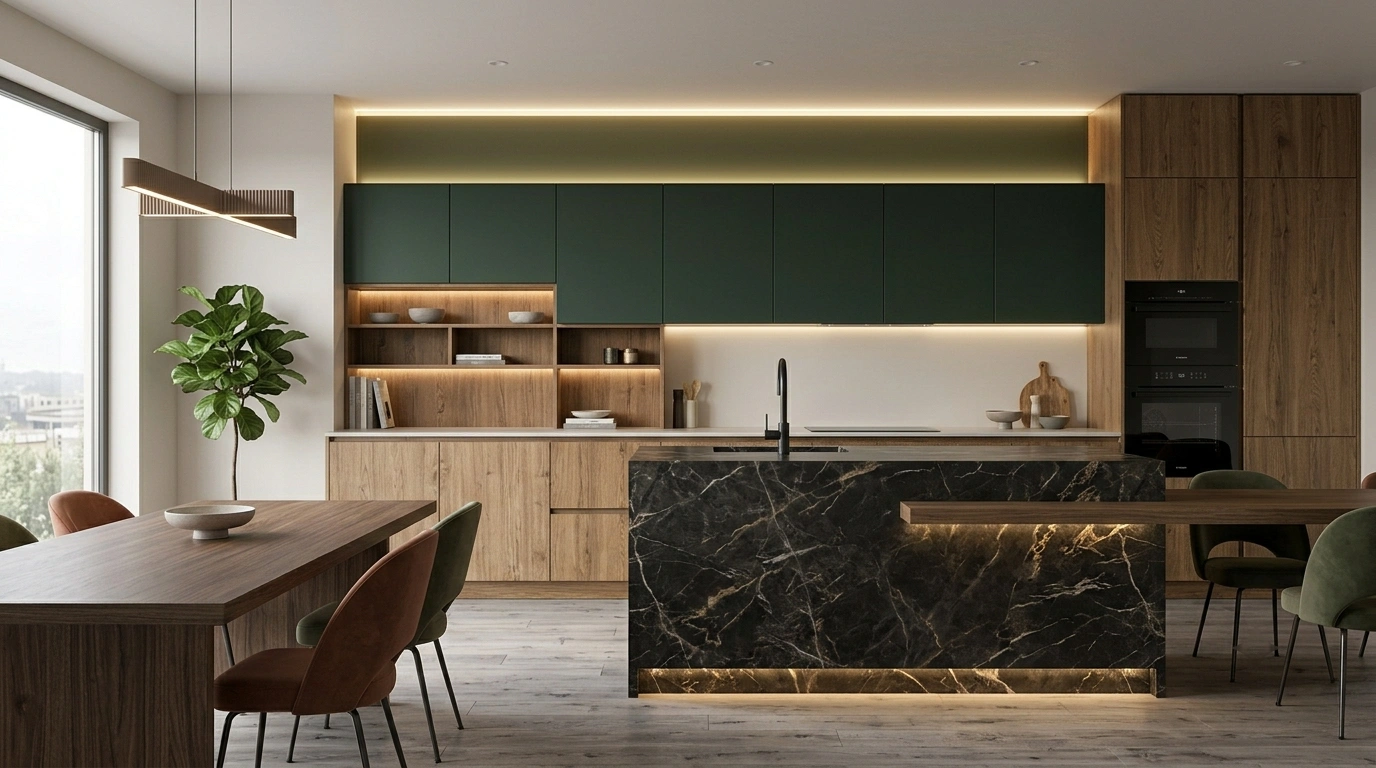
Stone-finish laminates, marble patterns, granite textures, and concrete-style finishes bring a completely different energy into a room. Where wood feels warm and settled, stone feels architectural and deliberate. It has presence.
Where it works best:
Overusing it. Stone-finish laminates are strong visual statements, and an entire room clad in a bold marble pattern can start to feel more like a showroom than a home. This finish tends to work best as an accent: one wall, one island, or one feature rather than wall-to-wall coverage.
What people often get wrong: Overusing it. Stone-finish laminates are strong visual statements, and an entire room clad in a bold marble pattern can start to feel more like a showroom than a home. This finish tends to work best as an accent: one wall, one island, or one feature rather than wall-to-wall coverage.
The honest trade-off:Stone finishes date differently than wood does. A marble-look laminate that feels current today might feel distinctly “of its era” in a decade, the same way certain granite patterns from years past now read as dated the moment you see them. If you’re choosing this for a long-term space, go with subtler, more neutral stone patterns rather than the boldest veining you can find.
Solid-Colour Laminates: Quiet, Confident, Endlessly Flexible
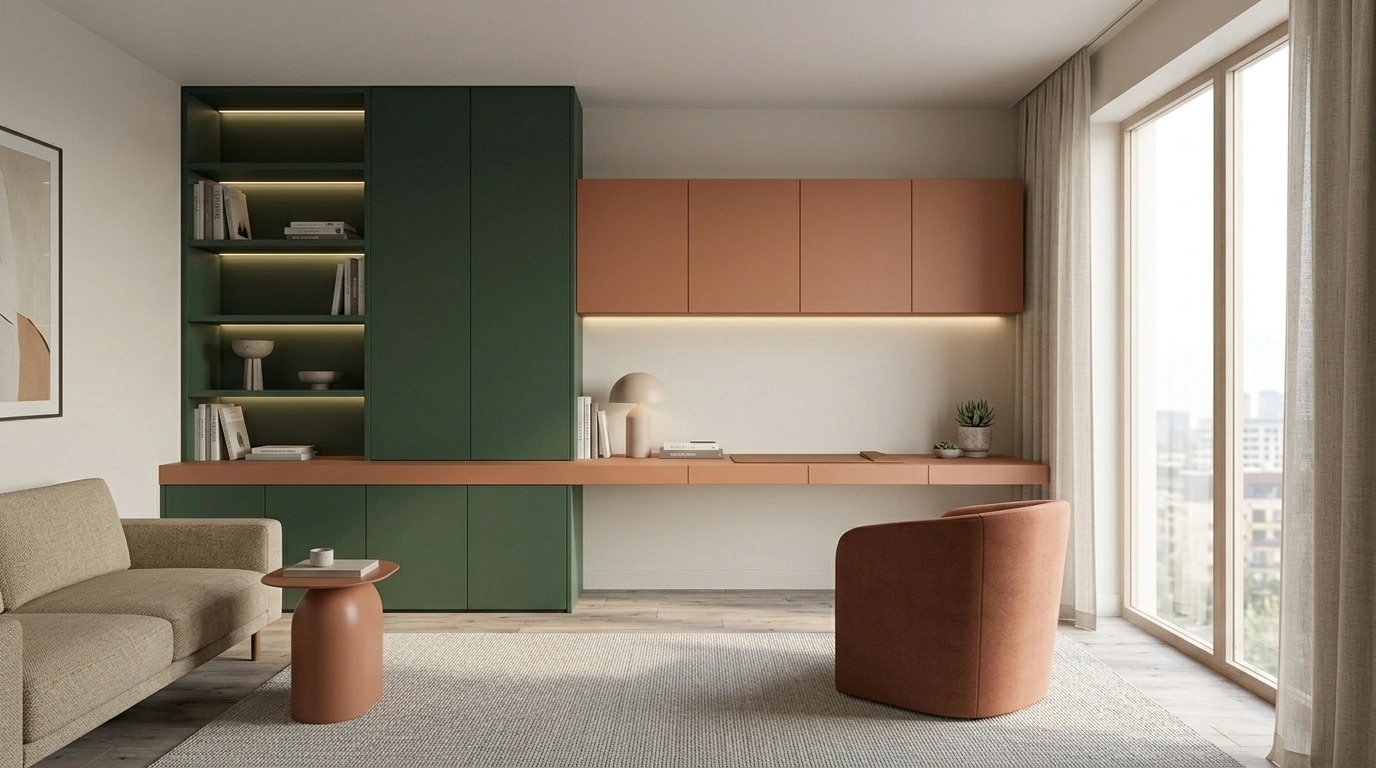
This is the category people underestimate the most, and honestly, it might be the most misunderstood finish on this entire list. Solid laminates don’t try to imitate anything. No wood grain, no stone veining, just a clean, uniform color. And that simplicity is exactly what makes them so useful.
Where it works best:
Modern and minimalist interiors, commercial spaces that need to stay visually consistent across years of use, kids’ rooms where a punch of color matters more than texture, and honestly, almost anywhere you want the furniture to support the room rather than compete with it.
What people often get wrong:
Assuming solid means boring. A well-chosen solid color—a deep bottle green, a warm terracotta, or a soft sage—can carry more personality than a busy wood or stone pattern ever could, precisely because it commits to one clear idea instead of trying to mimic something else.
The honest trade-off:Solid laminates show scratches and surface wear more visibly than patterned finishes do, simply because there’s no grain or texture to disguise a mark. Lighter solids especially need a bit more care, though this varies significantly depending on the specific finish and quality grade.
So, How Do You Actually Decide?
Instead of picking based on what looks best in isolation, ask three quick questions about the room in question.
What’s the room already doing visually?
A space with a lot of natural texture—exposed brick, a statement light fixture, patterned tiles—often looks better with a calmer solid or subtle wood laminate rather than adding another busy pattern into the mix. A plain, understated room, on the other hand, has more room to carry a bold stone or wood-grain finish without feeling cluttered.
How long do you want this to last, visually? Wood ages the most gracefully of the three; it rarely looks “trendy” or “dated,” just consistently pleasant. Stone patterns are more tied to design eras, so bolder choices here carry more risk of feeling outdated sooner. Solid colors sit somewhere in between, largely depending on how bold or muted the shade itself is.
What’s the room actually used for? High-touch, high-wear areas like kitchen counters benefit from finishes that hide daily use well, often a mid-tone wood or a textured solid rather than a glossy stone pattern that shows every water mark. Lower-wear areas like a study unit or a display cabinet have far more room for bold experimentation, since they simply won’t take the same daily beating.
And a Genuinely Useful Trick: Combine Them
One of the things we keep coming back to with clients is that this doesn’t have to be an either-or decision. A kitchen with wood-finish base cabinets and a stone-finish island. A bedroom with a wood-tone wardrobe and a solid-color accent wall unit. A café counter in solid color paired with a stone-finish backsplash behind it.
Mixing finishes within one space, done thoughtfully, almost always looks more considered than committing to a single finish everywhere. It also solves a practical problem: you get the durability and warmth of wood where you need it and the visual drama of stone or the clean confidence of a solid color exactly where it’ll have the most impact.
Bringing It Back to Your Space
There isn’t a universal right answer between wood, stone, and solid, and if anyone tells you there is, they’re probably just describing their own personal taste rather than what actually suits your room. What matters is matching the finish to how the space is used, how much natural light and texture it already has, and how long you want it to look right before you even start thinking about a change.
If you’re standing in front of a sample board trying to make this call for your own home or workspace, bring your room’s photos, your usage habits, and your honest budget to our team at Vidyalam. We’d rather spend twenty extra minutes helping you pick the right finish than have you living with a laminate that photographs beautifully but never quite feels like yours.
Share Blog: