Most people think of laminates as a kitchen thing. A wardrobe thing, maybe. And sure, that’s where the conversation usually starts. But once you actually start paying attention to the spaces around you—a café you like, the reception at your workplace, a friend’s newly constructed living room—you start noticing laminates everywhere, doing jobs you never really clocked before.
That’s the interesting part about decorative laminates. They’re not a one-room affair. They’re a problem-solving material that happens to look good, which is exactly why they show up in such wildly different settings, from a child’s study table at home to the front desk of a five-star hotel. Let’s actually walk through where and why.
At Home: Where Laminates Quietly Do the Heavy Lifting
Kitchens
This is the obvious one and for good reason. Kitchen cabinets, countertops (in some builds), and shutters deal with heat, moisture, oil, and constant handling, probably more daily wear than any other surface in the house. Laminates built for kitchens are chosen specifically for how they hold up against this, not just how they look in a catalogue.
What’s less talked about is how much the choice of laminate changes the experience of cooking. A high-gloss shutter under harsh tube lighting can be genuinely tiring to look at after a long day. A warm, textured matte finish in the same spot feels calmer, even though functionally they’re doing the same job.
Wardrobes and Bedroom Furniture
Bedrooms are a different beast entirely. There’s far less wear and tear here, which means the laminate choice becomes almost entirely about mood and personality rather than durability. This is where people tend to experiment: a bold wood-tone shutter, a soft pastel interior, and sometimes even a subtly patterned laminate on the inside of a wardrobe just for the small joy of opening it.
We’ve noticed something interesting working with clients on this: bedroom laminate choices reveal a lot about how people actually want to feel in that room, far more than kitchen choices do. Kitchens get chosen practically. Bedrooms get chosen emotionally.
Study and Kids’ Rooms
Study tables, bookshelves, and kids’ room furniture usually call for a completely different logic: durability against scratches from pencils, water bottles, and general roughhousing, paired with colors that don’t feel too “grown-up formal” or too obviously “childish” either. Laminates here often lean into brighter, more playful tones, but increasingly parents are asking for finishes that can grow with the child rather than needing a redo in five years.
Living Rooms and TV Units
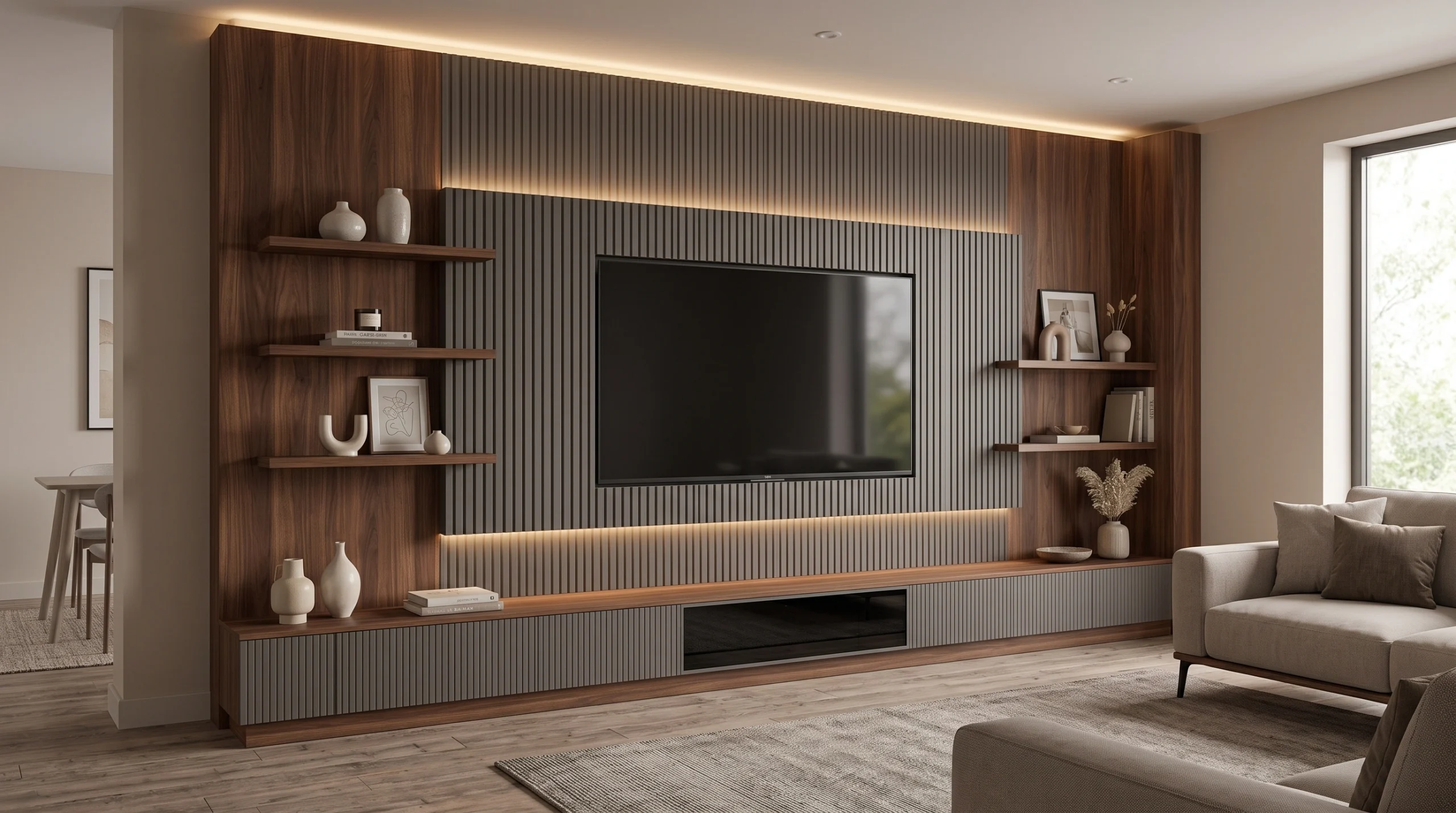
This is arguably where laminates get to show off the most. TV units, display shelves, console tables—these are furniture pieces meant to be looked at, not just used. Statement laminates, whether high-gloss or richly textured, often go here specifically because the room has fewer functional demands and more room for visual drama.
Beyond the Home: Where Laminates Take On a Different Job Entirely
Offices and Workspaces
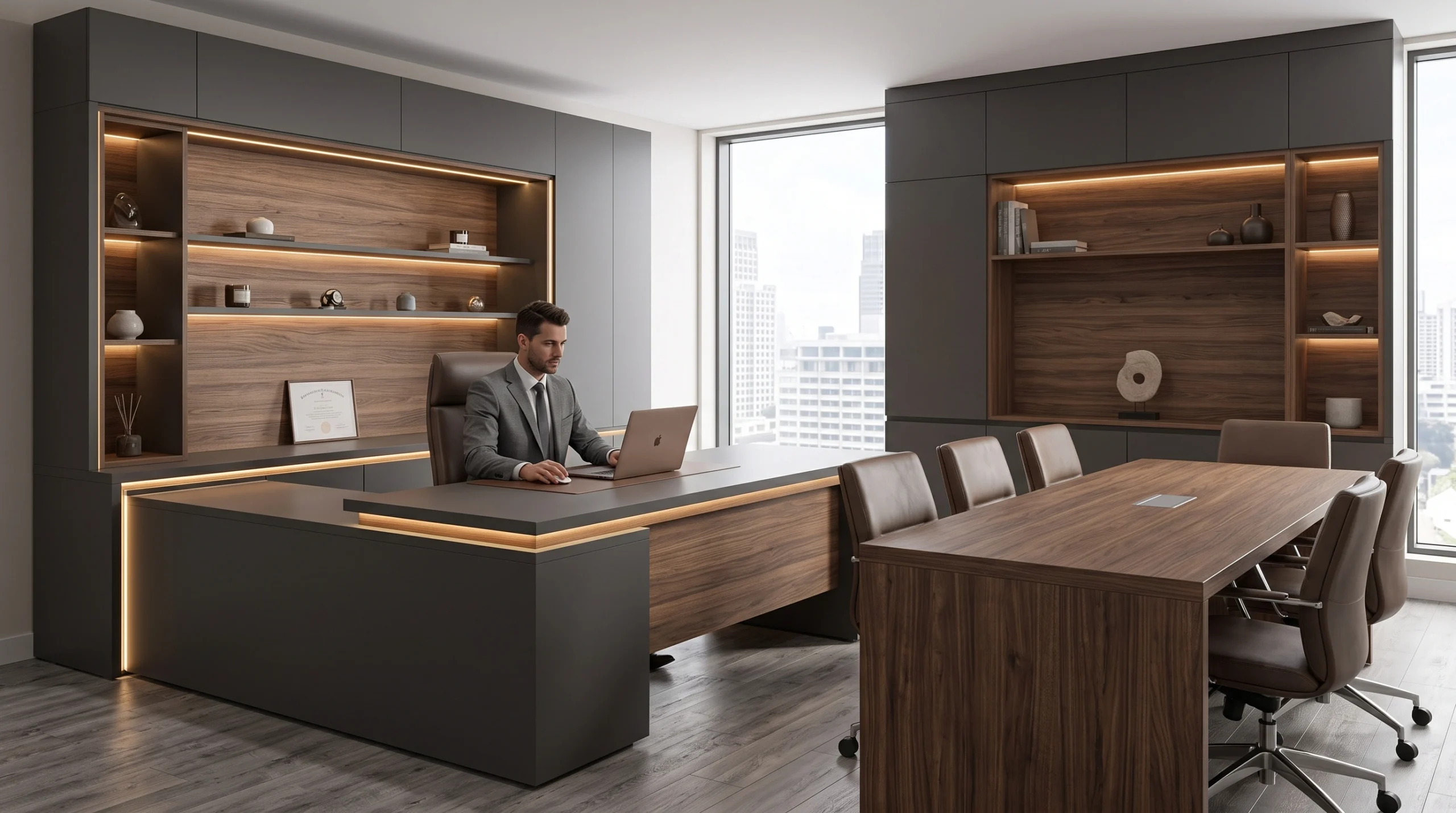
Step into any modern office, and laminates are doing a lot of quiet work: workstation surfaces, cabin partitions, reception desks, and meeting table tops. But the priorities shift completely from a residential setting. Offices need laminates that can survive years of constant use by dozens of different people, resist scratches from laptops sliding around, and still look presentable to a client walking in for a meeting.
Color choices in commercial spaces also tend to be more restrained: neutral woods, grays, and subtle textures, because the furniture needs to work across different teams, different tastes, and different years of use without ever feeling like it needs updating.
Retail Stores
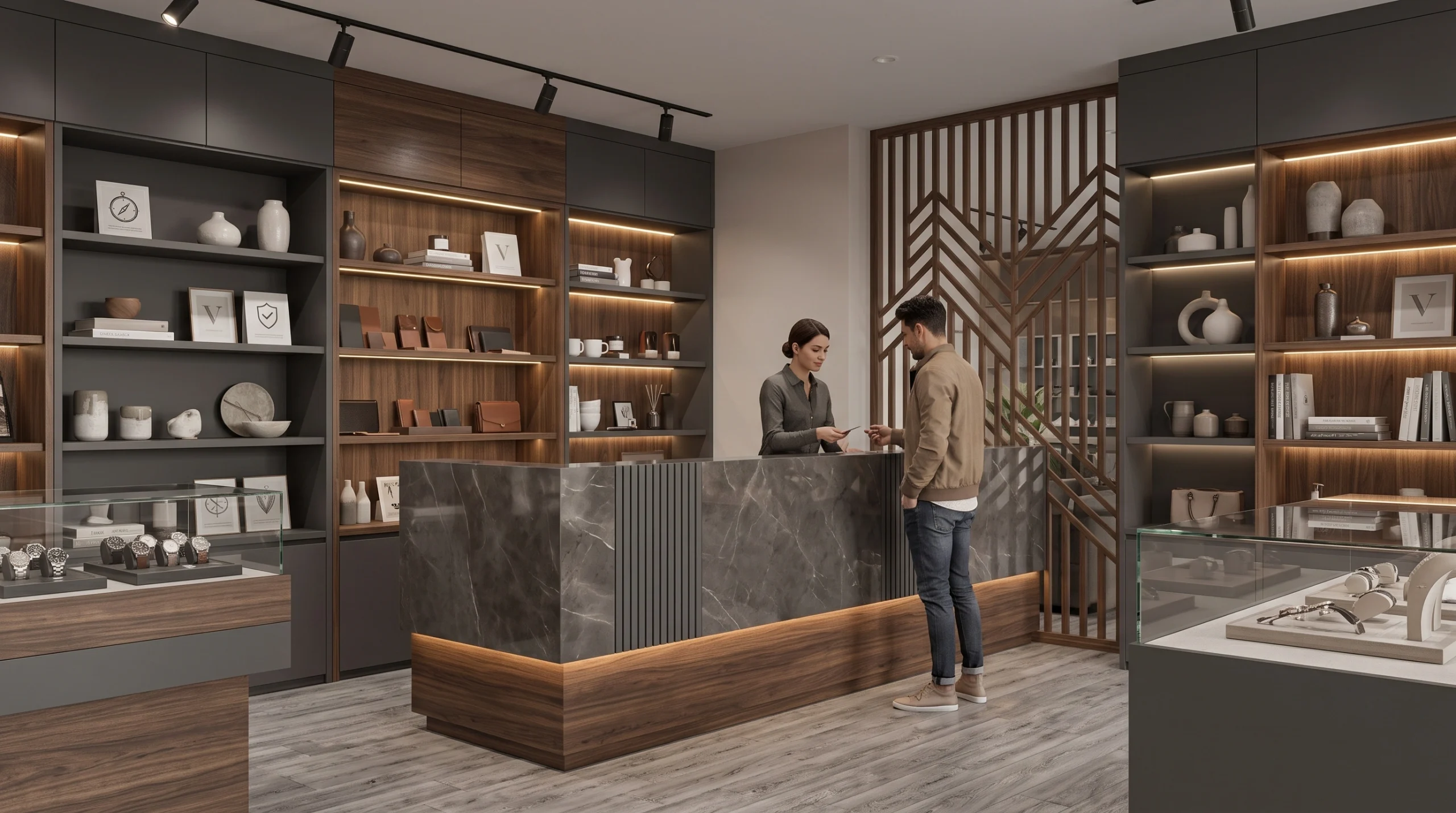
Retail is a genuinely fun category for laminates because the furniture itself becomes part of the brand experience. Display counters, shelving units, changing room partitions, billing counters—all of it needs to reflect the store’s identity while surviving constant handling from staff and customers alike.
A high-end boutique might lean into rich, dark, glossy laminates that feel premium under the store lighting. A casual, everyday retail chain might go for brighter, sturdier, easy-to-maintain finishes because the volume of foot traffic simply doesn’t allow for anything delicate.
Hospitality: Hotels, Restaurants, and Cafés
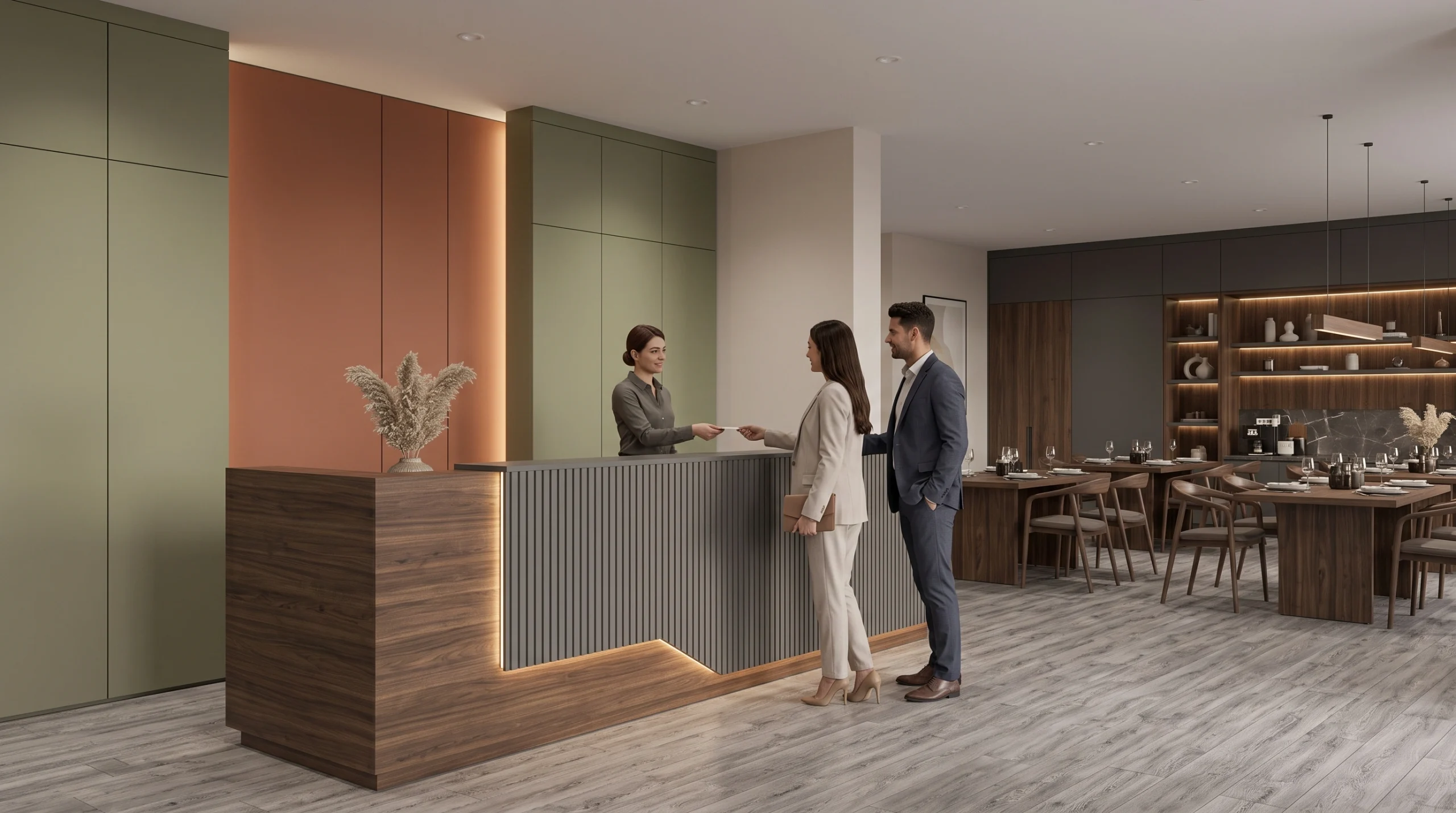
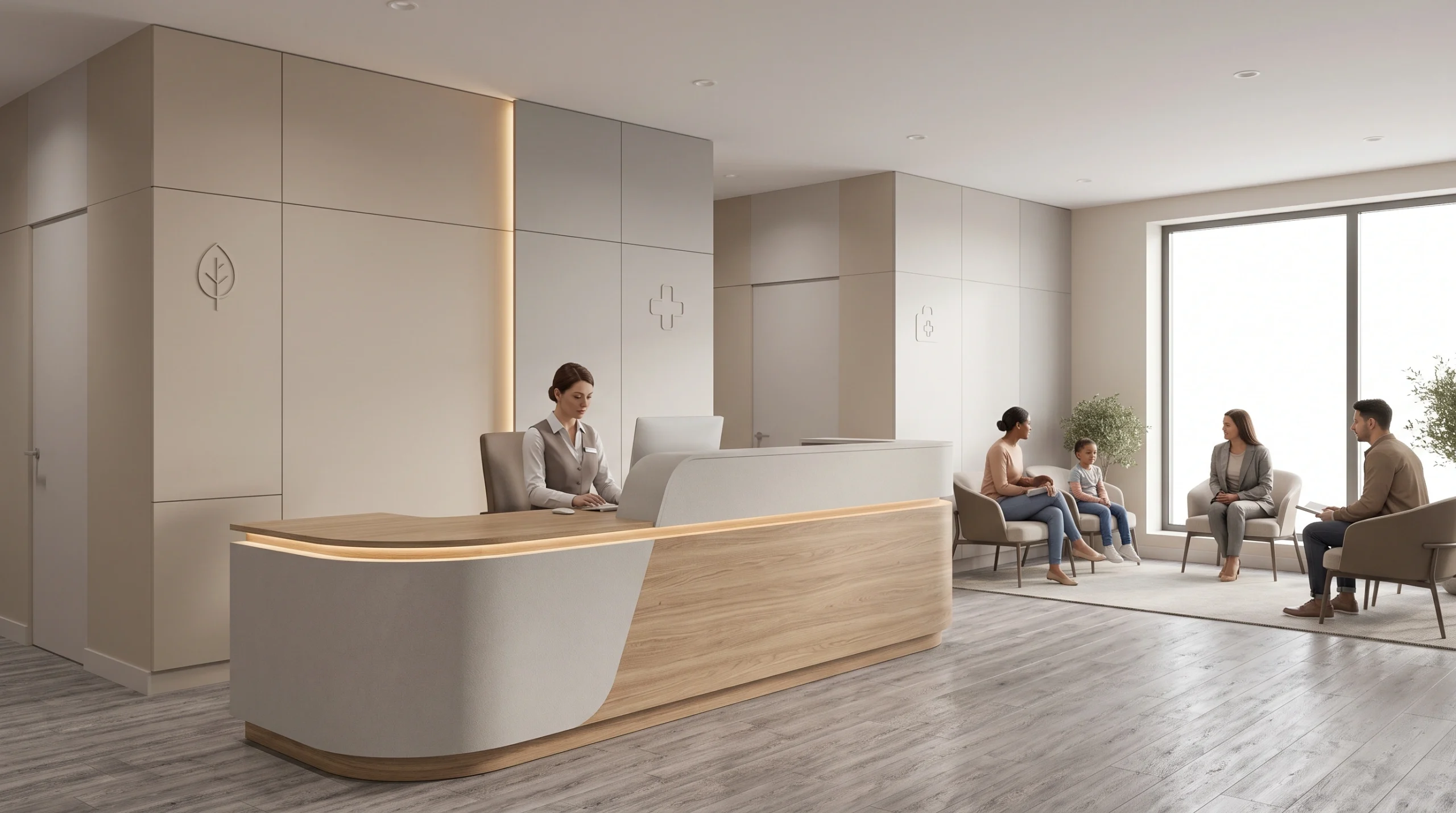
This is probably where decorative laminates get to be the most expressive. Hotel reception desks, restaurant seating booths, and cafe counters. These spaces are trying to create a feeling the moment someone walks in, and laminates play a bigger role in that than most guests would ever consciously notice.
Restaurants in particular often mix laminate finishes across a single space, a warm wood-tone booth here and a bold accent panel there, to build atmosphere without relying purely on paint or lighting. And because these are high-footfall commercial spaces, the laminates chosen also need to handle spills, heat from nearby kitchens, and years of guests brushing past them daily.
Healthcare and Institutional Spaces
A quieter but genuinely important application. Hospitals, clinics, and schools need furniture that’s easy to clean, resistant to frequent wiping down with disinfectants, and durable enough to handle heavy daily use without needing frequent replacement. Laminates here are chosen almost entirely on practical merit: hygiene, durability, and low maintenance, with aesthetics playing a smaller, though not irrelevant, role.
The Common Thread Across All of This
What’s interesting when you look at all these applications side by side is that the material barely changes, but the reasoning behind choosing it changes completely depending on where it’s going. A homeowner picking a wardrobe laminate is thinking about how a room feels every morning. A hotel manager picking a reception desk laminate is thinking about how a stranger will judge the space in the first ten seconds of walking in. Same category of product, completely different set of priorities.
This is exactly why “which laminate is best” is genuinely the wrong question to ask. The better question is always “best for what, and where.” A finish that’s perfect for a boutique’s dramatic changing room might be a poor, high-maintenance choice for a busy family kitchen. A laminate ideal for a hospital corridor might feel far too clinical for a cozy bedroom.
Conclusion
Over the years, we’ve supplied laminates for kitchens that see three meals cooked in them every single day and for hotel lobbies that see hundreds of guests walk past in an afternoon. What we’ve learned from sitting across the table from both kinds of clients is that good laminate selection is never really about picking a trendy finish; it’s about understanding exactly what a space will go through and matching the material to that reality.
Whether you’re furnishing a single bedroom or fitting out an entire commercial property, the questions worth asking stay the same: How much daily wear will this surface face? Who’s going to be looking at it, and what should they feel when they do? And will it still hold up and still look right five years from now?