We see a specific kind of disappointment a lot at Vidyalam. A client picks a beautiful laminate, gets it installed, loves it for the first year, and then comes back two or three years later a little deflated, asking why it doesn’t look the way it used to. Almost every time, the laminate itself is fine. What’s changed is how it’s been cleaned, touched, and lived with, day after day, without anyone really noticing the small habits adding up.
Laminates are genuinely durable when treated right. The gap between “this still looks new after eight years” and “this looks tired after three” usually comes down to a handful of everyday habits, not the material’s quality. So instead of the usual list of do’s and don’ts, let’s actually talk about why laminates wear the way they do and what to do about it.
Understand What You’re Actually Protecting
A laminate isn’t a single solid material. It’s a layered sheet bonded onto a core board, with the top layer doing all the visual and protective work. That top layer is genuinely tough against everyday contact, but it’s not indestructible, and it has specific weaknesses: prolonged moisture at the edges, abrasive scrubbing, sharp direct impact, and long exposure to harsh chemicals or direct heat.
Once you think of it this way, maintenance stops being a vague checklist and starts being about avoiding these specific stresses. That mental shift alone changes how people treat their furniture.
Daily Cleaning: Less Effort Than Most People Assume
This is where we hear the most confusion. People either over-clean with harsh products out of anxiety or under-clean because they assume laminates need almost no attention. Neither is quite right.
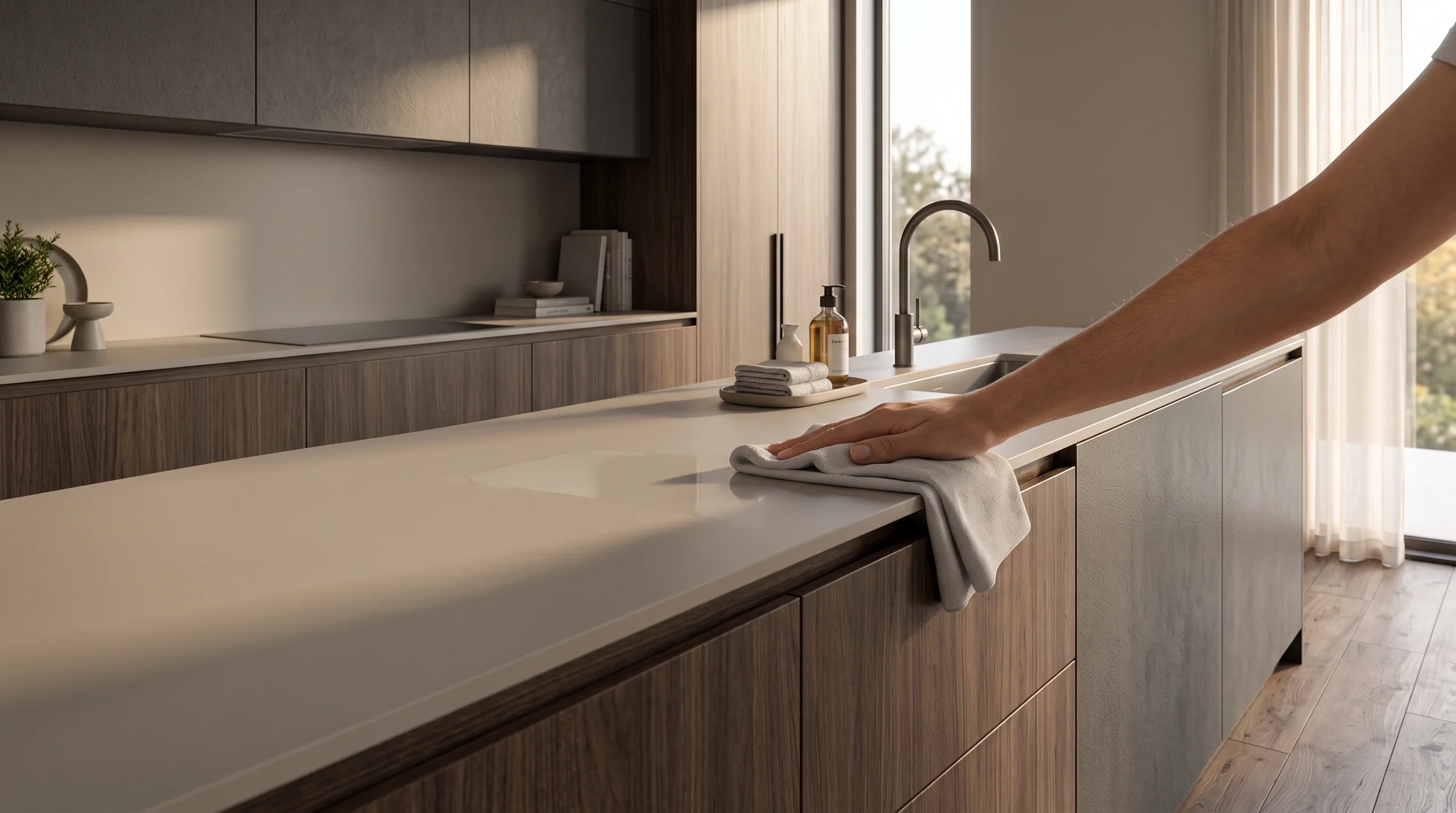
A simple, damp, soft cloth handles the vast majority of daily cleaning needs. Wipe away dust, light spills, and fingerprints. For slightly stubborn marks, a mild soap solution works better than people expect. What actually causes damage over time isn’t the daily wipe-down; it’s reaching for the wrong tools when a mark doesn’t come off on the first try.
Abrasive scrubbers, steel wool, and harsh scouring powders are the biggest culprits here. They might lift a stubborn stain faster in the moment, but they also create microscopic scratches on the surface. Individually, these scratches are invisible. Over months and years, they accumulate into that dull, slightly hazy look laminates get when they’ve been aggressively cleaned one too many times.
If a stain doesn’t come off with a soft cloth and mild soap on the first or second try, let it sit with a damp cloth for a few minutes before trying again, rather than immediately switching to something stronger.
Moisture Is the Quiet Long-Term Enemy
Laminates handle occasional water contact fine: a splash while washing dishes, condensation from a glass, humidity in the air. What actually causes long-term damage is standing moisture, particularly at edges, joints, and corners where water can seep beneath the surface layer rather than just sitting on top of it.
This is why kitchen counters near sinks and bathroom-adjacent furniture tend to show wear first, specifically along edges rather than in the middle of a flat surface. Once moisture gets under the laminate at a seam, it can cause swelling, lifting, or a change in texture that no amount of surface cleaning will fix.
Wipe up standing water near sinks, stovetops, and washbasins promptly rather than letting it sit, and periodically check corners and joints for any lifting or texture change, especially in high-moisture rooms like kitchens and bathrooms.
Heat Deserves More Respect Than It Usually Gets
Direct, sustained heat is one of the most underestimated threats to a laminate surface. A hot vessel placed directly on a countertop, a heat-emitting appliance pushed flush against a laminate cabinet, or a window that lets in intense direct afternoon sun onto a specific patch of furniture. All of these can cause discoloration, warping, or a change in sheen over time, even if the laminate is rated for reasonable heat exposure.
This one’s easy to overlook because the damage isn’t immediate. A single hot pan won’t ruin a countertop. But a habit of always setting hot vessels down in the same spot, day after day, will eventually leave a mark that’s very hard to reverse.
Use trivets or heat-resistant mats for anything hot, and be mindful of where appliances that generate consistent heat, like a toaster or an electric kettle, get placed long-term.
Scratches: Prevention Beats Any Cure
Once a laminate is genuinely scratched, there’s very little you can do to fully reverse it. Most “fixes” are really just disguises, not repairs. Which makes prevention the only real strategy that matters here.
Most scratches come from a small set of predictable sources: sliding heavy or rough-bottomed items across a surface instead of lifting them, cutting directly on a laminate countertop instead of using a board, and cleaning with abrasive materials as mentioned earlier. None of these is dramatic events; they’re small, repeated actions that compound over years.
Lift, don’t drag, when moving anything heavy or rough-edged across a laminate surface, and always use a cutting board or protective mat for kitchen counters, even if the laminate is marketed as scratch-resistant.
Sunlight and Colour Fading
Laminates, like most surfaces, can fade slightly with prolonged, direct sun exposure over years, though the extent varies quite a bit depending on the specific colour and finish. Darker, richer tones tend to show fading more visibly than lighter neutrals simply because the contrast is more noticeable when it happens.
This matters most for furniture placed directly in the path of strong window light for large parts of the day. A wardrobe against a west-facing window, for instance, or a TV unit that sits in direct afternoon sun.
Where possible, use curtains, blinds, or UV-filtering window film in rooms where laminate furniture sits in direct, prolonged sunlight, particularly for darker or bolder color choices.
A Simple Monthly Habit That Makes a Real Difference
Beyond daily wiping, it helps to do a slightly more thorough check once a month: inspecting edges and joints for any lifting, checking corners near sinks or windows for moisture damage, and giving high-touch areas like handles and cabinet edges a slightly more careful clean than the daily quick wipe.
The Long View
Here’s the truth: no laminate, however premium, will stay looking perfect forever if it’s cleaned with the wrong products, left wet at the edges, or subjected to constant direct heat and sunlight. But equally, a mid-range laminate that’s genuinely cared for well will often outlast and outshine an expensive one that isn’t.
Maintenance isn’t really about elaborate routines or expensive cleaning products. It’s about a handful of small, consistent habits: the right cloth instead of the abrasive one, a trivet instead of a hot pan directly on the counter, and a quick wipe of standing water instead of leaving it to sit. None of these take much effort individually. Together, they’re the actual difference between a laminate that looks tired in three years and one that still looks genuinely good a decade in.