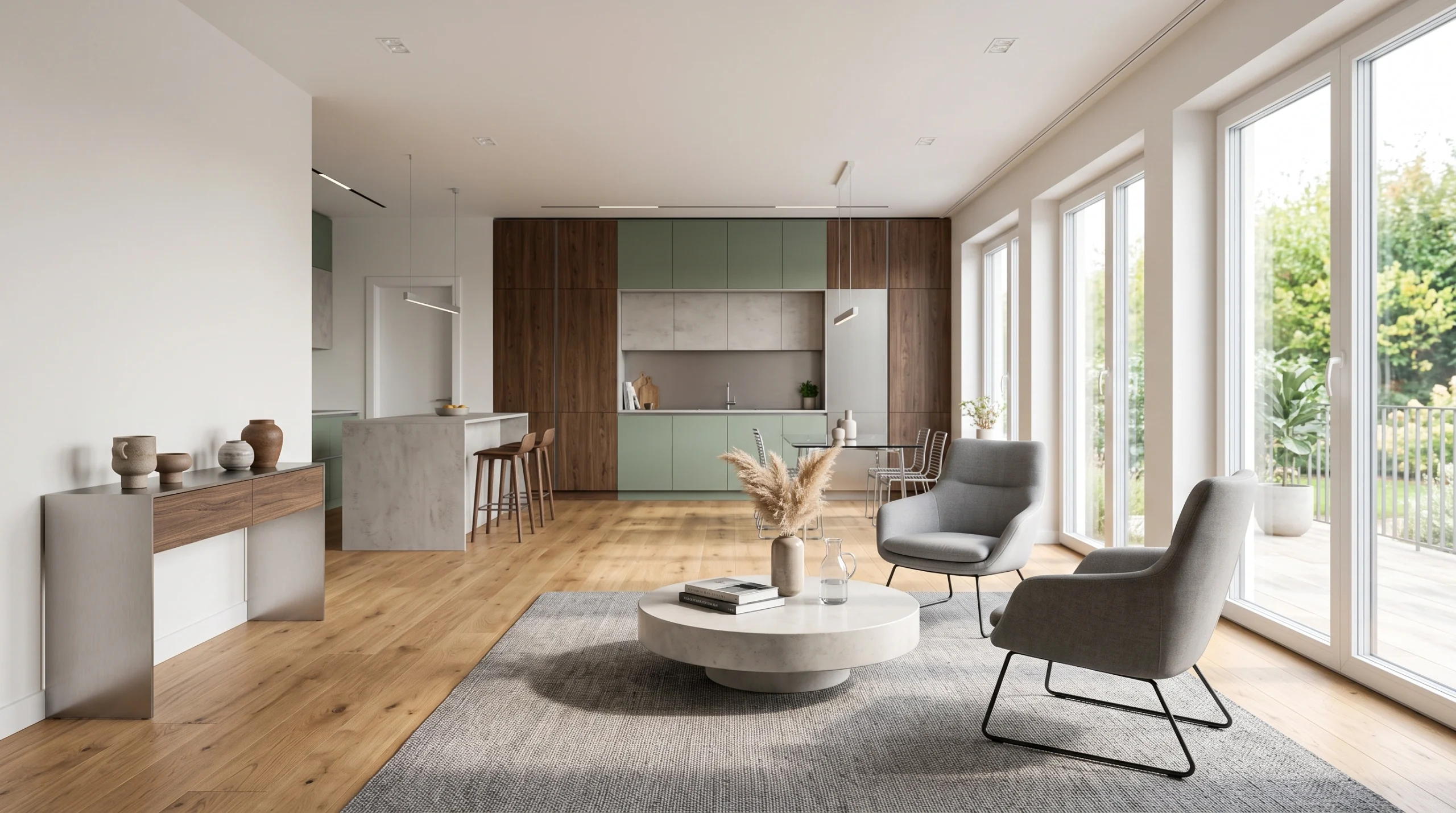
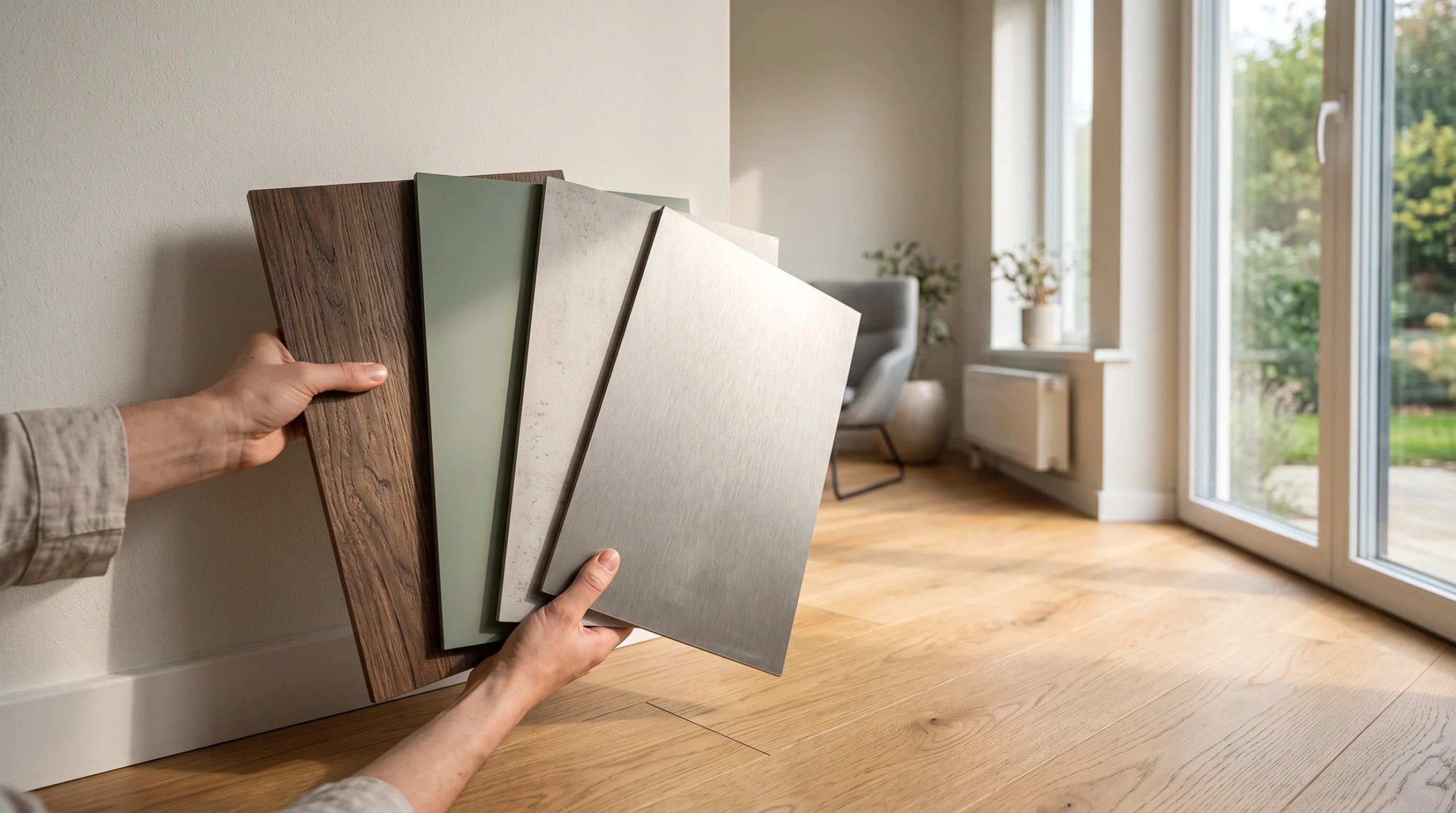
If you’ve ever stood in front of a laminate sample book flipping through hundreds of finishes, you already know the real problem. It’s not that there aren’t enough options; it’s that there are too many good-looking ones, with no obvious way to compare them. A swatch that looks stunning under bright showroom lighting can look completely different once it’s sitting on your wardrobe door at home, in your actual daylight, next to your actual flooring.
The mistake most people make is choosing a laminate the way they’d choose a paint color, almost entirely on looks. But a laminate isn’t paint. It’s a surface you’ll open, shut, wipe, lean on, and live with for the next several years. That calls for a slightly different approach, one that starts with a few questions most people skip on their way straight to the color swatches.
Start With the Room, Not the Sample Book
Before you look at a single finish, get honest about what the room will actually put that laminate through. A kitchen shutter deals with heat, oil, and moisture every single day. A bedroom wardrobe deals with almost none of that. A reception desk in an office sees dozens of hands and elbows a day; a display cabinet in a living room sees almost none.
This sounds obvious written down, but it’s the single most skipped step in the buying process because sample books are organized by color and pattern, not by “what survives a busy kitchen.” Walk into the decision already knowing which category your space falls into: high-use or low-use, wet zone or dry zone, and half your options will filter themselves out before you even start comparing finishes.
Let Function Narrow the Finish, Not the Other Way Around
Once you know what the room demands, you can sensibly narrow it down to glossy, matte, wood-look, stone-look, or solid colors. The short version: high-moisture, high-touch areas generally do better with matte or textured finishes that hide daily wear, while lower-use, more decorative spaces have far more room to carry a bold glossy or stone-pattern finish purely because it looks good.
The point isn’t to talk you out of a finish you love. It’s to make sure you’re choosing from a shortlist that actually suits the room, rather than falling for a beautiful sample and then trying to justify it for a space it was never well suited to in the first place.
Understand What Thickness and Grade Actually Mean
This is the part almost nobody asks about, and it probably matters more than colour in the long run. Laminates typically range from thinner sheets suited to vertical, low-contact surfaces like wardrobe interiors up to thicker, denser grades built for horizontal, high-pressure surfaces like countertops and tabletops. Using a thinner, lighter-duty laminate on a heavy-use horizontal surface is one of the more common reasons people see premature wear even on an otherwise good-quality product.
Match the Laminate to the Right Core Board
The laminate is only the top layer. What it’s bonded to matters just as much, yet this is a step people frequently skip because it feels like a “behind-the-scenes” decision rather than a design one.
Plywood generally handles moisture and structural load better, which makes it a stronger choice for kitchens and bathroom-adjacent furniture. MDF gives a smoother, more even surface and machines well for detailed edges, but tolerates sustained moisture less comfortably. Particleboard tends to be the more budget-friendly option, reasonable for lower-moisture, lower-load furniture, but not the first choice for a heavily used kitchen counter.
Pairing a premium laminate with a core board that isn’t suited to the room is a bit like buying a great pair of shoes and glueing on a sole meant for a different terrain. The visible layer isn’t the whole story.
Set a Realistic Budget Before You Fall in Love With a Swatch
Laminate pricing isn’t flat; it scales with brand, thickness, and design complexity. Solid colors and simple wood tones are usually more affordable than heavily textured, embossed, or high-design laminates, largely because of the additional manufacturing involved in creating those extra details.
The part people forget to budget for is everything around the laminate itself: adhesive quality, edge-banding, and installation labor. Two homes can buy the same laminate and end up with noticeably different results simply because one used a better adhesive and installer and the other tried to cut costs there instead. If you’re working to a budget, it’s often smarter to economize on the laminate design tier slightly and keep the installation quality high, rather than the other way around.
Test the Sample in Your Own Light, Not the Showroom’s
Showrooms are lit to make everything look good; that’s their job. Your home has its own mix of natural daylight, warm bulbs, or cool LED lighting, and laminate colors can shift noticeably under different light sources. A warm wood tone that looked rich in the showroom can read slightly orange under a cool-toned kitchen light, and a crisp white can look flat under warm lighting.
Take the largest sample chip you can get, and actually hold it up in the room it’s going into: morning light, evening light, artificial light, all of it ideally next to your flooring or countertop material if that’s already decided. It takes an extra day or two, but it’s the single best way to avoid color regret later.
Don’t Ignore Installation and Edge Detailing
Even the best laminate in the world will fail early if it’s poorly installed. Rough edge-banding, gaps at joints, or inconsistent adhesive application creates exactly the weak points where moisture gets in, and lifting starts the kind of damage that has nothing to do with the laminate’s actual quality and everything to do with how it was fitted.
When you’re finalizing a laminate purchase, it’s worth asking as many questions about the installer’s process as you do about the laminate’s design range. A mid-range laminate installed carefully will almost always outlast a premium one installed carelessly.
Check for Warranty and Certification
Ask what the warranty actually covers. Scratches, moisture damage, and discoloration aren’t always covered under the same terms, and it’s worth knowing the difference before you need to use it rather than after. It’s also reasonable to ask whether the laminate carries any recognized quality or environmental certification, particularly if indoor air quality or long-term emissions are a concern for your household.
A Short Mental Checklist
Before you commit to a laminate, it helps to run through this quickly: what the room will realistically go through day to day, a finish shortlisted for that use rather than looks alone, the right thickness and grade for a vertical or horizontal surface, a core board suited to the room’s moisture levels, a full budget that includes installation and edge-banding, not just the laminate sheet, a sample tested in your own lighting, and a clear understanding of what the warranty actually protects.
Individually, none of these steps is particularly time-consuming. Together, they’re the difference between a laminate you’re still happy with a decade later and one you’re quietly tolerating within a couple of years.
Bringing It Together at Vidyalam
Most people who walk in unsure about “which laminate to choose” aren’t actually confused about taste; they usually know what they like. What they haven’t always worked through is how that finish will hold up against their specific room, their budget’s hidden corners, and the light their home actually gets.
That’s the part we spend the most time on with clients at Vidyalam. Not just showing you beautiful samples, but working backwards from your room, your usage, and your budget to a shortlist that’ll genuinely hold up. Bring us your space and your questions, however basic they feel, and we’ll help you get to a decision you won’t need to revisit anytime soon.